2026-2027 Back to School Planner Evaluation
The transition between academic years often requires a significant shift in routine, organization, and goal setting. For students, parents, and educators navigating the upcoming 2026-2027 academic year, the 2026-2027 Back to School Planner represents a specialized organizational tool designed to streamline this process. This product is distinct from generic planners because it addresses the specific logistical and emotional demands of returning to school. It combines comprehensive scheduling features with educational tracking tools, offering a structured approach to managing the complexities of the school calendar.
When evaluating digital planning resources for the 2026-2027 cycle, it is essential to understand the format and functionality of editable Canva interiors intended for Amazon KDP (Kindle Direct Publishing). These files are not merely static documents; they are flexible assets that allow users to customize content before printing or sharing digitally. The following analysis explores the specifications, benefits, and considerations associated with this type of planner to help readers determine if it aligns with their organizational needs.
Understanding the Core Functionality
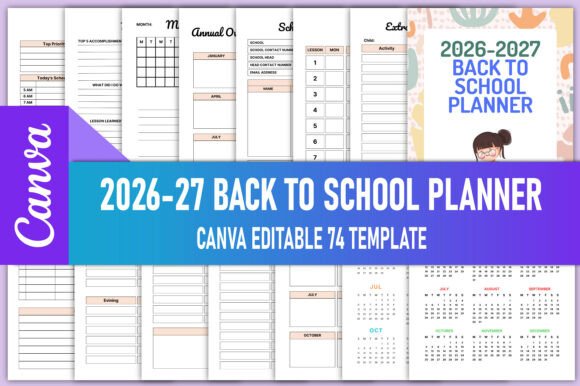
A standard planner typically focuses on time management, but the 2026-2027 Back to School Planner expands its scope to include holistic student life management. The product specification outlines a robust collection of 74 pages designed to cover every aspect of the academic journey. Unlike pre-printed notebooks found in retail stores, these Editable Canva Link files provide a layer of customization that traditional stationery cannot match.
The core value proposition lies in the ability to tailor the planner to specific requirements before finalizing the document. Users receive high-quality print-ready PDF files, alongside PNG and JPG formats, ensuring compatibility with various printing methods. Whether a user intends to create a physical workbook for personal use or publish their own version via KDP, the provided templates serve as a foundational framework. The inclusion of an annual overview and yearly goals section sets the stage for long-term planning, while the detailed monthly calendars break down the academic year into manageable segments.
Key Features and Organizational Benefits
The effectiveness of any planning system depends on the relevance of its sections. This planner includes a diverse array of tools designed to address common pain points for students and families:
- Academic Scheduling: The inclusion of daily, weekly, and monthly planners allows for granular control over time. Specific sections for exam timetables, extra-mural schedules, and subject lists ensure that academic priorities are visually mapped out.
- Routine Management: Transitioning back to school often disrupts sleep and morning routines. The planner addresses this with dedicated trackers for reminders before and after school, bedtime routines, and chore checklists. These sections help establish consistency during the chaotic first few weeks of the term.
- Goal Tracking: Beyond simple scheduling, the planner supports personal growth through vision boards, bucket lists, and study trackers. The reading routine tracker and book list encourage literacy and continuous learning outside of formal curriculum requirements.
- Communication Tools: A dedicated section for school parent meetings and responsiveness reminders facilitates better home-school communication, ensuring that important dates and updates are never overlooked.
The ability to edit these elements means that a student can prioritize their specific subjects, while a parent can adjust the focus toward homework completion or extracurricular balance. This flexibility is particularly valuable when different family members have varying schedules and responsibilities.
Evaluating the Format: Digital vs. Physical
One of the primary considerations for potential users is the delivery method. Since this product consists of editable digital files, the user must decide how they intend to utilize them. The "print-ready" nature of the PDF files suggests that the ultimate goal is often a physical copy. However, the availability of PNG and JPG files opens up possibilities for digital annotation using tablets or iPads.
For Physical Use: If the user plans to print the planner at home or via a professional service, the high-quality resolution ensures crisp text and clear lines. The 74-page structure provides ample space without being overly bulky. The tradeoff here is the upfront effort required to print, bind, and assemble the book. Users must also consider the cost of paper and binding materials compared to purchasing a pre-made notebook.
For Digital Use: Those who prefer tablet-based planning can import the editable Canva links directly. This offers the advantage of reusing the planner across multiple devices and making instant changes without erasing ink. However, this requires access to a device capable of running the Canva application and a willingness to learn the interface. For some, the friction of learning new software may outweigh the benefits of digital flexibility.
Situations Where This Planner is a Strong Fit
This specific planner configuration is best suited for individuals who require a highly personalized organizational system. It is an ideal solution for:
- Homeschooling Families: Parents who need to track individualized curricula, field trips, and social activities will find the customizable subject lists and timetable sections invaluable.
- Students with Complex Schedules: Individuals juggling multiple sports teams, part-time jobs, and advanced coursework benefit from the detailed breakdown of daily and weekly reviews.
- KDP Aspiring Entrepreneurs: Creators looking to sell journals or planners on Amazon KDP can leverage these interior designs. The ready-to-upload status significantly reduces the technical barrier to entry for self-publishing.
- Organizational Minimalists: Users who dislike clutter appreciate the ability to remove unnecessary sections and only keep the tools relevant to their specific goals.
In these scenarios, the 2026-2027 Back to School Planner acts as a bespoke solution rather than a one-size-fits-all product. The emphasis on preparation, such as supplies lists and back-to-school checklists, specifically targets the anxiety often associated with the start of a new academic year.
Considerations and Potential Limitations
While the feature set is extensive, there are factors to consider before committing to this format. The primary limitation is the reliance on external software. To fully utilize the "Editable Canva Link," the user must have internet access and a compatible browser or app. This dependency might be a hurdle for those seeking a completely offline experience.
Additionally, the quality of the final output depends heavily on the user's execution. If the user is not proficient in design software, the customization process may take longer than expected. There is also the consideration of the physical feel of a printed binder versus a professionally bound book. While functional, a DIY print job lacks the durability and tactile satisfaction of a commercial product.
Furthermore, users should evaluate whether they truly need 74 pages. Some individuals may find this volume overwhelming, preferring a more concise 30-day or semester-specific layout. Over-complicating a planner can sometimes lead to abandonment, where the tool becomes a burden rather than a help.
Decision-Making Insights
To determine if the 2026-2027 Back to School Planner is the right choice, readers should assess their current organizational gaps. If the struggle lies in missing deadlines, forgetting homework, or failing to prepare adequately for the school year, the comprehensive nature of this planner offers a structured remedy. The inclusion of specific trackers for reading and chores suggests a focus on habit formation, which is crucial for long-term success.
Conversely, if the user prefers a minimalist approach or already has a robust system in place, the extensive list of features might seem redundant. In such cases, a simpler daily journal or a generic calendar might suffice. Similarly, if the user is unwilling to engage with digital editing tools, purchasing a pre-printed planner with similar layouts might be a more efficient path.
Ultimately, the decision rests on the balance between customization and convenience. The 2026-2027 Back to School Planner excels in providing a tailored experience for those willing to invest time in setup. It serves as a versatile foundation for organizing the academic year, whether for personal efficiency or as a product for others. By understanding the capabilities and limitations of the editable file format, users can make an informed choice that supports their educational goals for the coming year.