Back to School Icebreaker: The Ultimate First Week Tool
The first week of school is a delicate balance of establishing routines and building genuine connections. For educators, parents, and even students stepping into new environments, the right Back to School Icebreaker can transform anxiety into excitement. Among the many resources available, the "All About Me" writing and drawing activity stands out as a versatile, no-prep solution that serves as more than just a worksheet; it is a foundational tool for classroom community.
What Is This Activity?
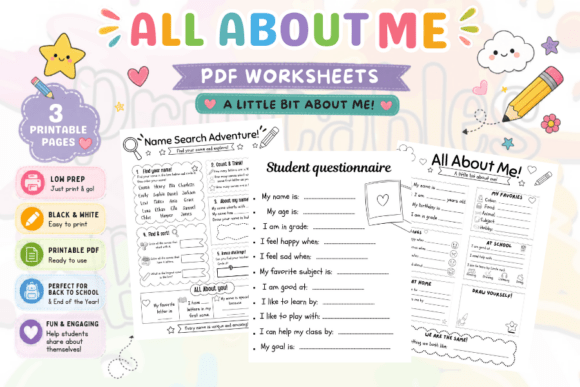
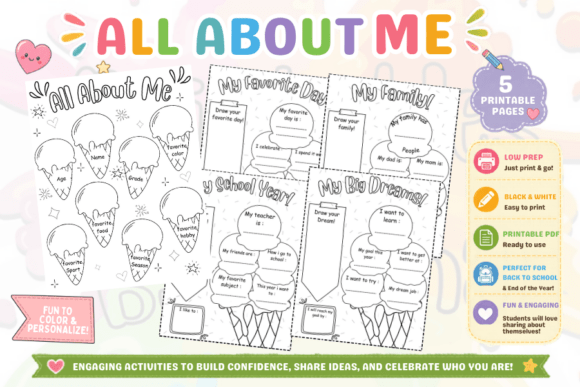
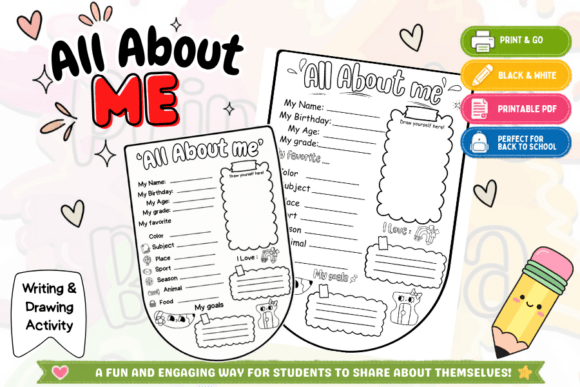
At its core, this resource is a printable PDF designed to help students introduce themselves through a blend of creative expression and structured writing. It goes beyond simple name tags or verbal introductions. Students are guided by specific prompts to write about their personal favorites, articulate their goals for the year, and express their unique personalities through self-portraits.
The format is straightforward: a black-and-white, US Letter size (8.5 x 11) document that requires zero preparation from the teacher. Whether used as a morning work assignment, a center activity, or a standalone project, it allows learners to engage with the material immediately upon printing. The simplicity of the design ensures that the focus remains on the student's voice rather than the complexity of the task.
Why Different Audiences Care
While the primary users are educators in early childhood and elementary settings, the value of this icebreaker extends to various groups who interact with the educational ecosystem. Each audience brings a different perspective to why this activity matters and how they evaluate its utility.
For Educators and Administrators
Teachers often face the challenge of managing large classes while trying to learn individual names and interests quickly. For them, the priority is ease of use and reliability. A resource that works "out of the box" saves valuable time during the chaotic first days of school. The ability to turn these worksheets into a bulletin board display adds an aesthetic layer that makes the classroom feel welcoming without requiring extra artistic effort from the instructor.
- Priorities: Time-saving, low stress, high engagement, and visual appeal.
- Use Case: A teacher uses the activity on day one to gauge writing levels while simultaneously collecting data on student hobbies to tailor future lessons.
For Parents and Guardians
Parents are often anxious about how their children will adapt to a new social environment. They view this activity as a window into their child's emotional state and creativity. For this group, the learning value and confidence-building aspects are paramount. Seeing their child successfully complete a task and share something personal can be a reassuring sign of readiness.
- Priorities: Child's confidence, clarity of instruction, and positive reinforcement.
- Use Case: A parent reviews the completed page at home, using the "goals" section as a conversation starter about what the child hopes to achieve this year.
For Creators and Content Developers
Bloggers, educational publishers, and digital creators often look for high-quality templates to include in their own resource libraries or to demonstrate teaching strategies. They evaluate the product based on quality, flexibility, and commercial value. A clean, black-and-white design is particularly attractive because it is cost-effective to print for others and easy to repurpose for different grade levels.
- Priorities: Professional layout, instant download capability, and adaptability.
- Use Case: An educational blogger features this activity in a "First Week Survival Guide," highlighting its effectiveness for kindergarten teachers.
For Hobbyists and Freelancers
Hobbyists interested in homeschooling or freelance tutors might appreciate the long-term usefulness of such materials. They often need resources that can be reused across different subjects or years. The fact that the activity encourages both writing and drawing skills makes it a dual-purpose tool that supports multiple developmental areas.
- Priorities: Versatility, durability of the concept, and cost-effectiveness.
- Use Case: A homeschooling parent keeps a stack of these pages to use not just in August, but also for starting new units or projects throughout the academic year.
Evaluating Suitability for Your Needs
Determining if this All About Me activity fits your specific situation depends on understanding your current constraints and goals. If you are looking for a quick way to break the ice without spending hours creating materials, the no-prep nature of this PDF is a significant advantage. However, if your goal is to foster deep, long-term collaboration, this activity serves best as a starting point rather than a comprehensive curriculum.
For beginners in teaching, the clear structure provides a safety net. The prompts guide students through the process, reducing the cognitive load required to generate content. Experienced professionals might find value in the flexibility to modify the prompts or extend the activity into larger group discussions. The black-and-white format is a strategic choice; it reduces printing costs and ensures that every student receives an identical, high-quality copy regardless of printer availability.
Critical Factors for Decision Making
When selecting a Back to School Icebreaker, consider the following dimensions:
- Skill Level: Is the language appropriate for Pre-K or 2nd Grade? The prompts must be accessible to ensure all students can participate meaningfully.
- Speed vs. Depth: Do you need a five-minute warm-up or a full-hour lesson? This resource can be adapted for either scenario depending on how much elaboration you encourage.
- Display Potential: Will you hang these up? The layout should support a bulletin board presentation, turning individual work into a collective celebration of diversity.
- Format Accessibility: Is the file an instant download? Immediate access is crucial when plans change at the last minute.
Building Community Through Creativity
The ultimate goal of any icebreaker is to humanize the learning environment. By allowing students to draw self-portraits and share their favorite things, the activity validates their identities before the academic rigor begins. This sense of belonging is critical for student success, particularly in the early grades where social-emotional learning is as important as literacy and numeracy.
Whether you are a veteran educator looking for a reliable staple or a new teacher seeking to build confidence in your classroom management, this printable offers a practical bridge between strangers and classmates. It transforms the abstract concept of "community" into tangible, visible art and writing. As students see their peers' drawings and read their stories, barriers begin to crumble, replaced by shared interests and mutual understanding.
In conclusion, the value of this resource lies not just in the paper it is printed on, but in the conversations it sparks. It is a simple yet powerful mechanism for setting the tone for the entire school year. By prioritizing creativity, ease of use, and student expression, it fulfills the needs of diverse stakeholders—from the busy teacher needing a quick win to the parent hoping for a smooth transition. When evaluating tools for the first week of school, remember that the most effective icebreakers are those that make every student feel seen, heard, and ready to learn.